Field notes on sea urchin

theunihunter

A running notebook on sea urchin: where it came from, who served it, whether it was any good. The hunt starts in New York and follows the kelp, every counter logged, mapped, and counted one box at a time.

Everywhere the hunt has gone
dot size = posts logged New York · home base
Worldwide
Manhattan · Live
★ HOME BASE
Hover any pin 428 posts · 177 counters · 21 cities · 10 countries

United States · Japan · Taiwan · South Korea · Spain · Maldives · New Zealand · Peru · U.A.E. · United Kingdom

1.0

A field guide to sea urchin: the species, the seasons, and a hit list of counters where great uni is served.

2.0

Uni 101

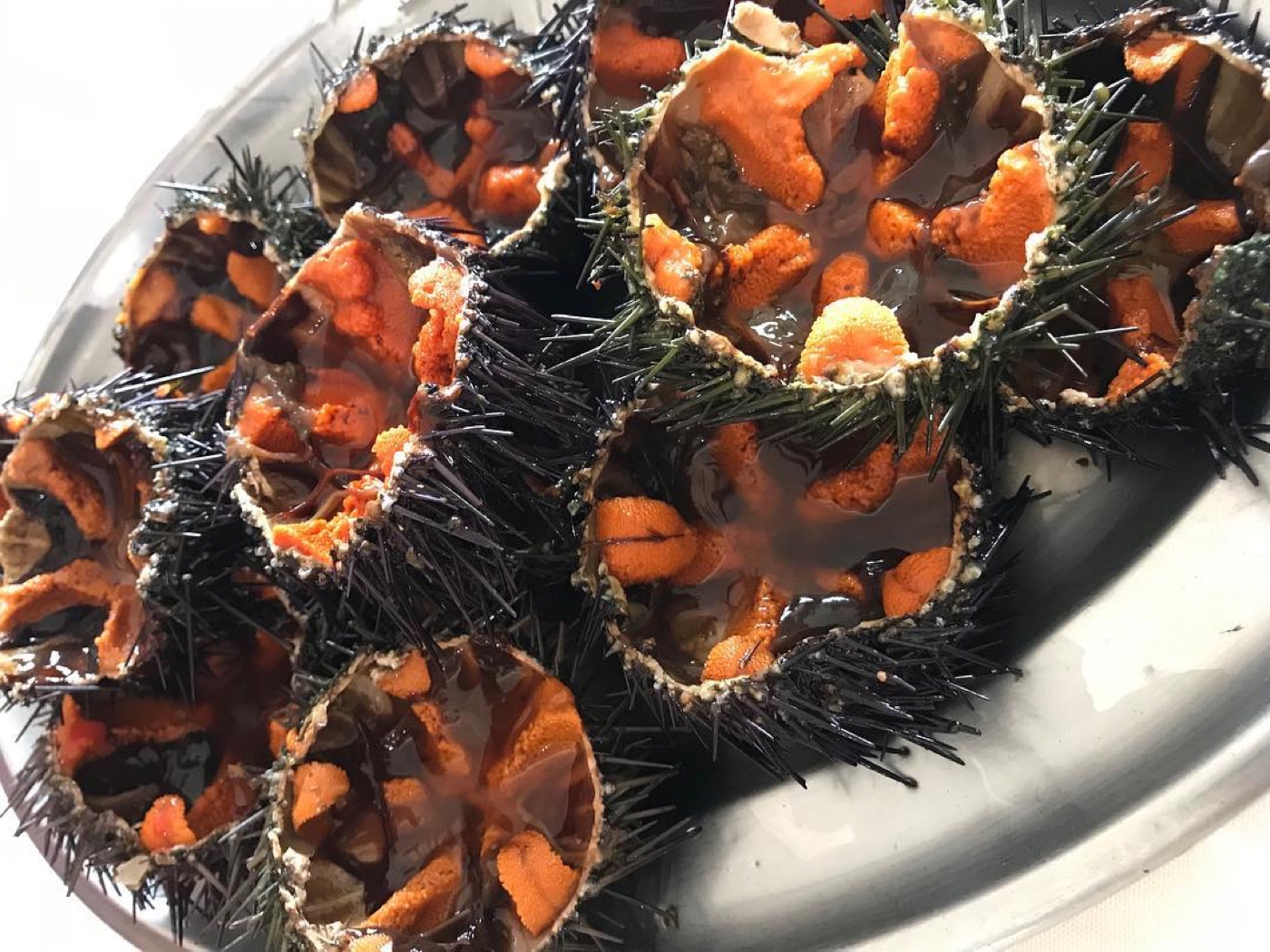
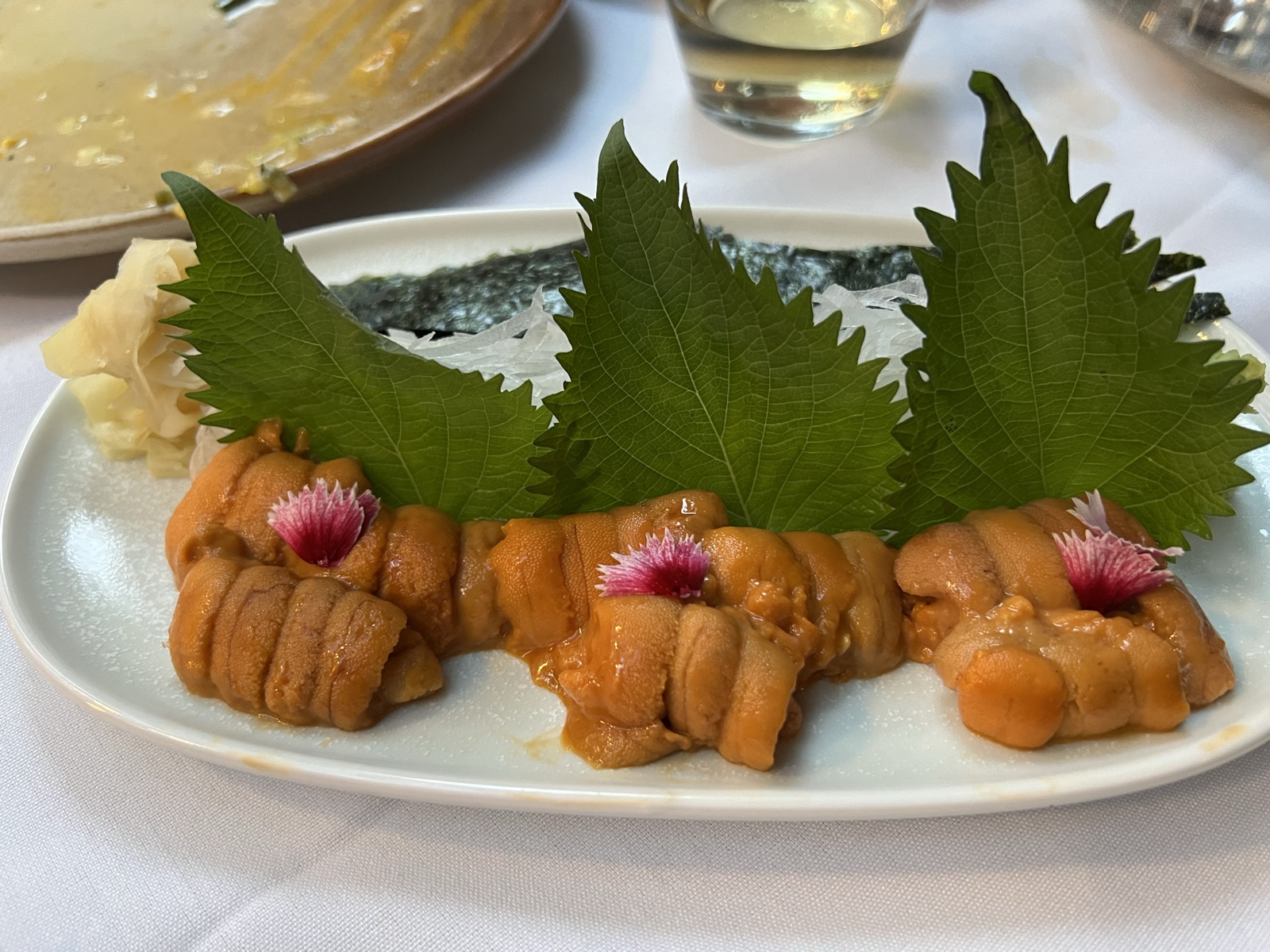
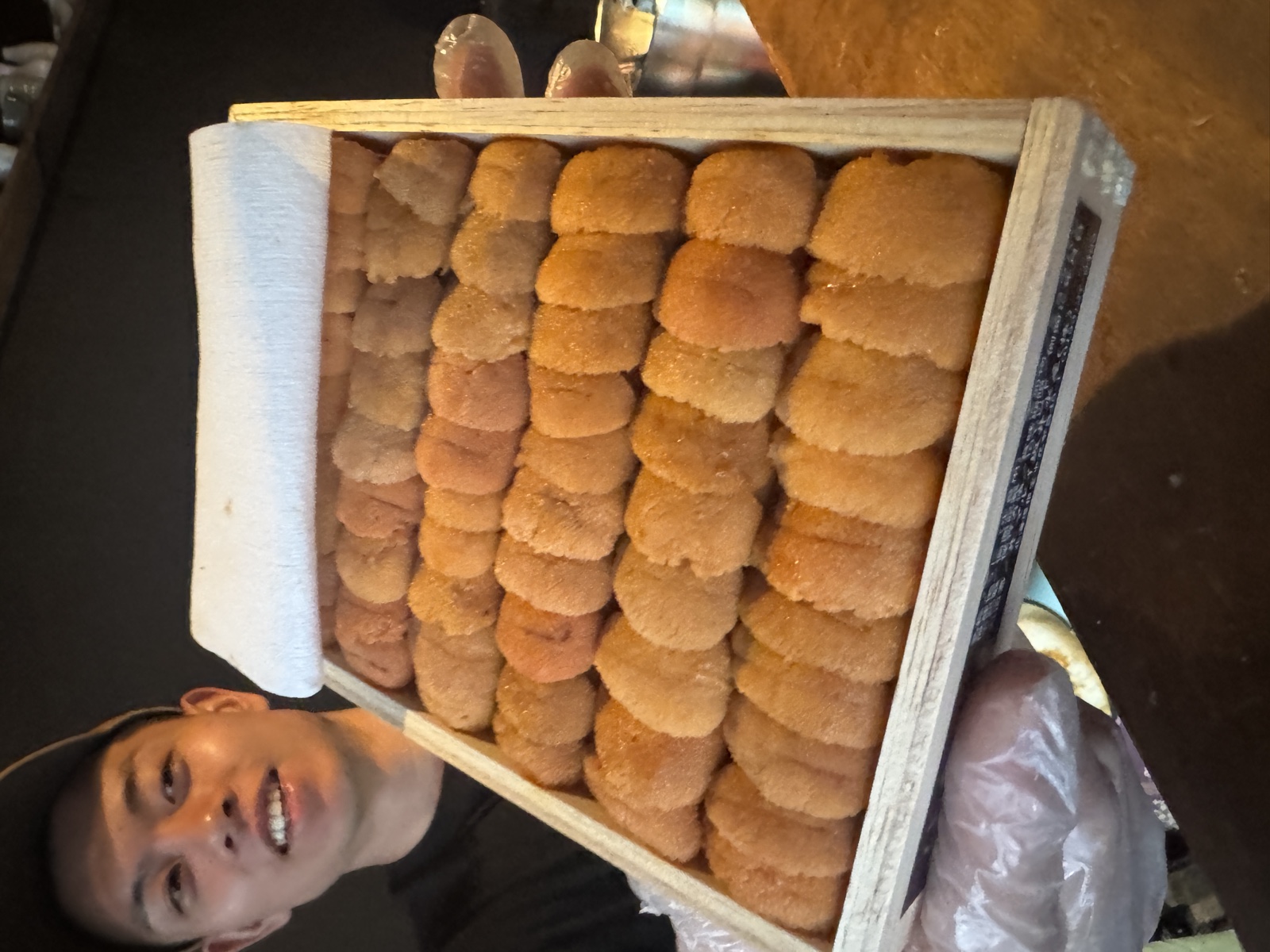
Some basics. Uni is the sea urchin's gonads (not quite roe), five soft lobes tucked inside a spiny shell. At a glance: small and deep orange is bafun, large and pale gold is murasaki. Diet does the rest. A kombu-fed Hokkaido box tastes nothing like a wakame-fed one a bay over, which is why the good ones print their origin.

What you're eating

The five gonad lobes inside each urchin, in males and females alike. No muscle, no roe.

How many kinds

Of roughly 950 urchin species, only about a dozen reach the plate. Two rule the sushi counter.

When it's best

Japan peaks June to August. The US coasts run opposite, Sept to March, so good uni is nearly year-round.

How it's served

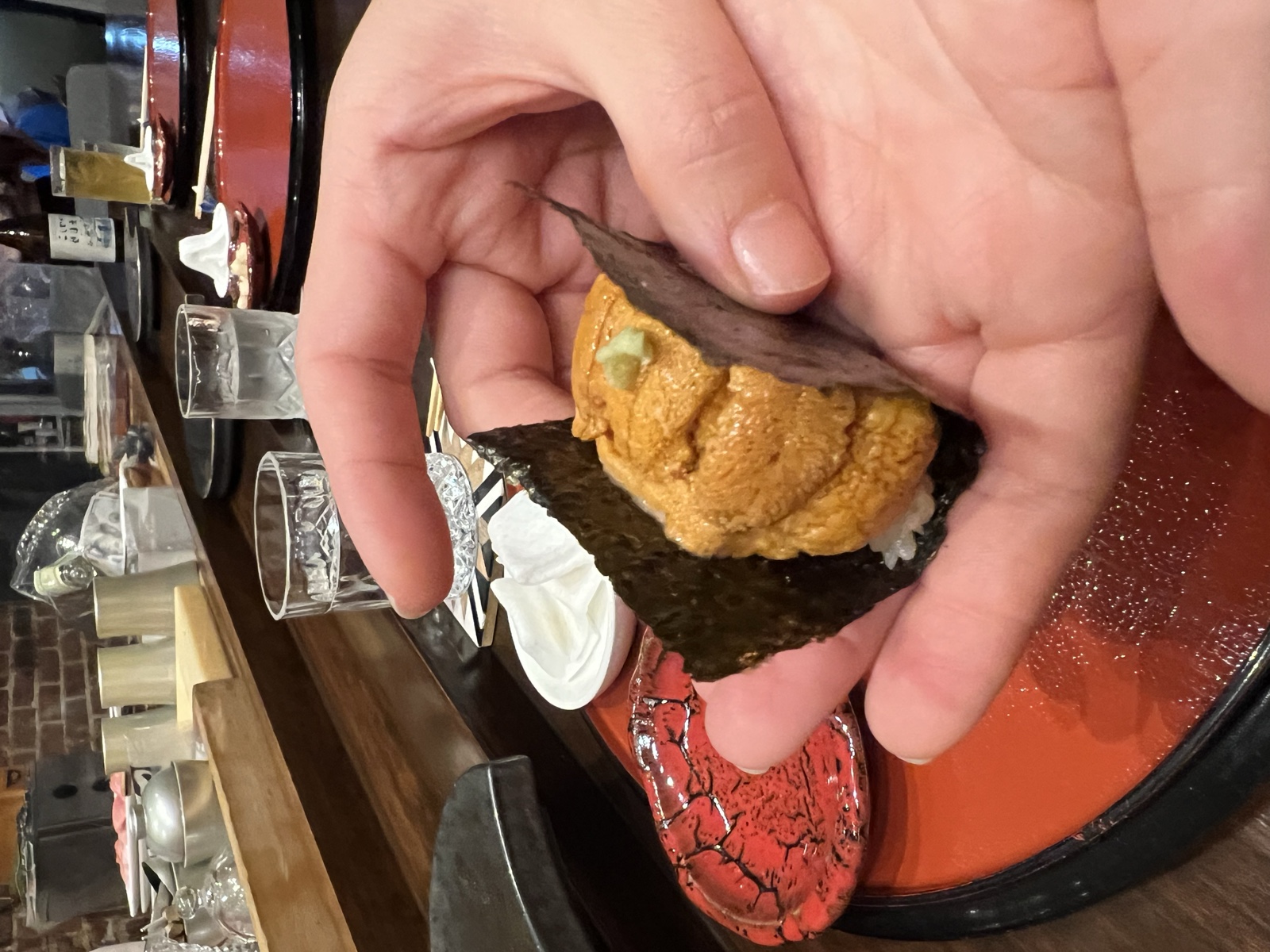
Almost always raw: as nigiri, wrapped in nori as gunkan-maki, or over rice in a donburi.

3.0

The hit list

A hundred and seventy-seven counters so far, each one sat at and paid for, then written up with the receipts. No press dinners and no borrowed opinions, just a stool at the bar and notes on whatever the chef set down.

Field log · live
177 counters logged
Scroll ·
click a counter
·No photo on file
Select a counter
177 logged across 21 cities
4.0

Field data

512

Tastings logged

8

Varieties catalogued

Jun-Aug

Peak Hokkaido season

16

Countries logged

6.0Three to know on sight

6.1

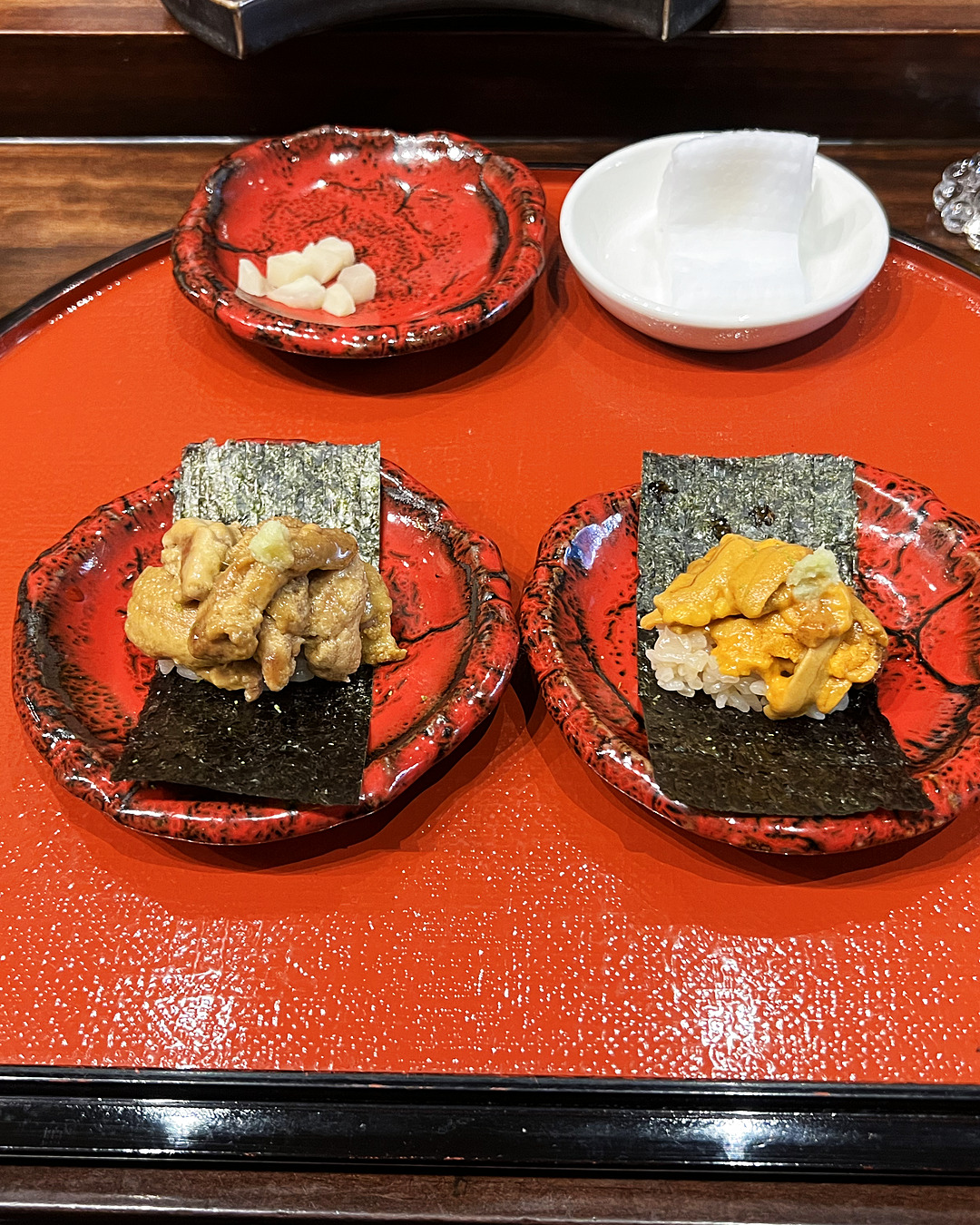
Murasaki uni

The larger, paler lobe of the classic pair: yellow to light orange. The delicate one, clean and gently sweet with a long creamy finish. If bafun is a statement, murasaki is a whisper. The safer first bite. Peak June through August.

6.2

Bafun uni

Named for the urchin's squat shape, not the flavor, mercifully. Smaller, deep orange, and the bolder of the two: dense, custardy, intensely umami. What most chefs mean by the quintessential uni taste. Peak June through August.

6.3

Santa Barbara uni

The understudy that often outsings Hokkaido. Buttery, faintly nutty, exceptionally sweet, and harvested a boat ride off the Channel Islands. Preferred outright by a number of top sushi chefs. Peak September through March, opposite the Japanese season.

7.0From deeper waters

7.1

Aka uni

The smallest variety and the loudest, with the boldest umami of any uni. Blink and the season is over. Summer only.

7.2

Kita murasaki uni

Hokkaido's premium murasaki, extra plump and deeply complex. Harvests alternate between the east and west coasts through the year, which is as close as uni gets to a schedule. Year-round.

7.3

Ezo bafun uni

Bafun raised on kombu, and the kelp shows up in the sweetness. The creamiest of all uni, priced to match at up to ¥5,000 per 100 grams. Peak June through August.

7.4

Ensui uni

Lobes packed in chilled seawater instead of the usual alum bath. No additive means no metallic aftertaste, which is the difference between a good box and a great one.

7.5

Maine uni

The East Coast outlier: creamy and briny with a clean ocean snap. Smaller than its Pacific cousins by law, harvested late fall to early spring before the spawn. Once a 14-million-pound gold rush, now down 99 percent, which is half the reason to chase it.

8.0

The hunt posts when there's something worth posting. Roughly weekly, occasionally not.

Follow @theunihunter